
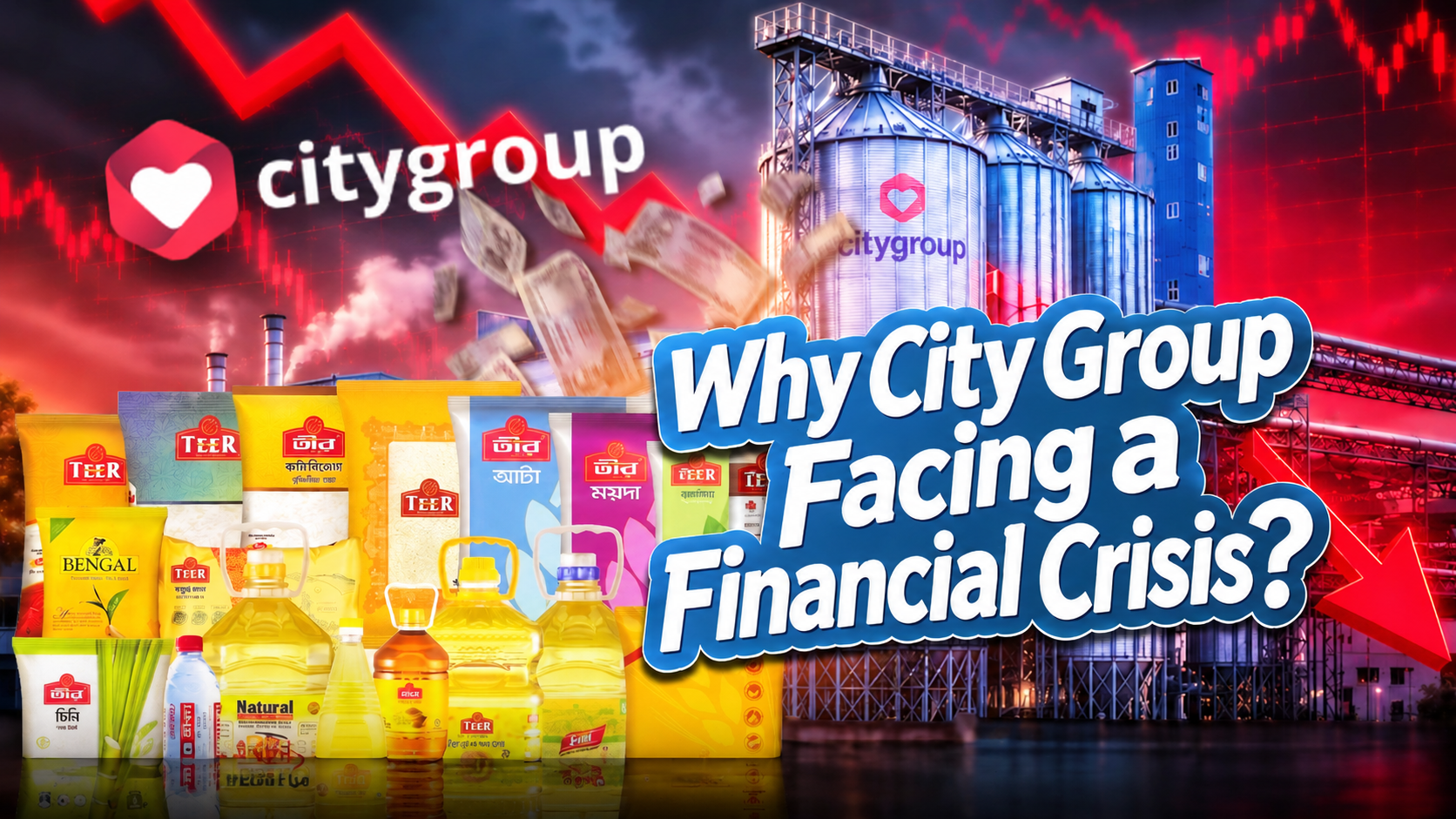
For more than five decades, City Group has maintained its position as one of Bangladesh’s most influential business conglomerates. Starting on a small scale in 1972, the company gradually transformed into a diversified enterprise. Today, with approximately BDT 32,000 crore in annual revenue, around 25,000 direct employees, and numerous products used by millions of households across the country, City Group has become one of Bangladesh’s most recognized conglomerates. However, in recent times, this industrial giant has found itself at the center of one of the largest corporate debt restructuring initiatives in Bangladesh’s history. The restructuring process involves thousands of crores of BDT in outstanding loans from several dozen financial institutions. So, how did City Group, once recognized as a symbol of consistent growth and business expansion, end up facing such a massive financial crisis?
Overview
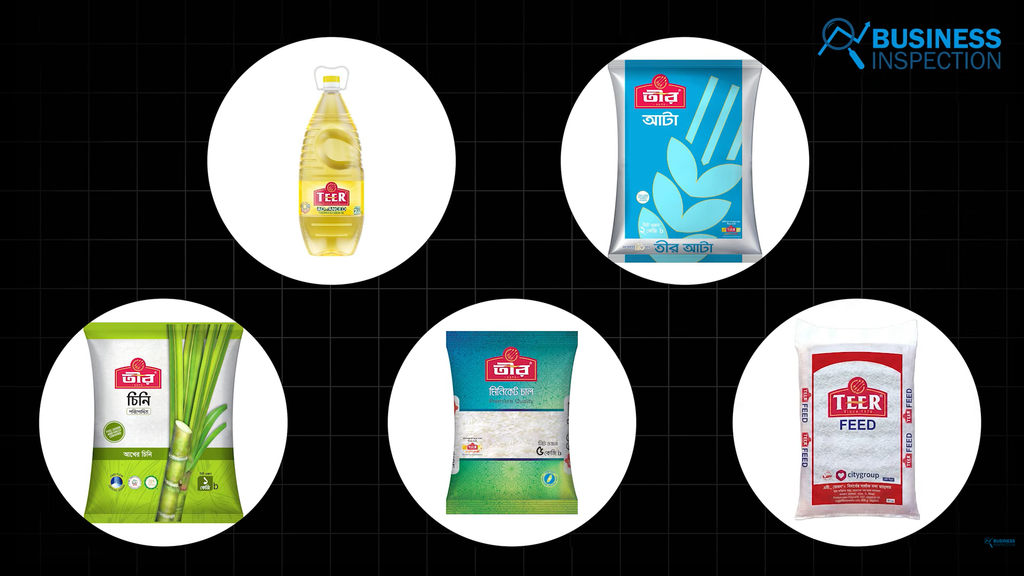
During the challenging years following Bangladesh’s independence, on February 6, 1972, Mr. Fazlur Rahman established a mustard oil manufacturing factory named City Oil Mills in Gandaria, Dhaka. This small venture marked the beginning of City Group. As consumer demand continued to grow, the company began diversifying its business operations. Its first major expansion came in 1992, when City Group established a soybean oil refining facility. In 1995, the company strengthened its position in the packaged staple food market by introducing TEER-branded atta, maida, and suji. As part of its backward integration strategy, City Group established its own printing and packaging facilities in 1999. The following year, in 2000, it launched a navigation business to transport imported raw materials. In 2001, the company introduced JIBON Drinking Water to the market. Its edible oil portfolio expanded further in 2002 with the introduction of Natural Super Refined Palm Olein.
City Group continued expanding rapidly over the following years. In 2004, the company introduced TEER Feed, followed by the production of soymeal and rapeseed cake in 2005. In 2006, City Group established a large-scale sugar refinery using European technology. A year later, in 2007, it launched a polypropylene woven bag manufacturing facility, significantly reducing its dependence on external suppliers for packaging materials. Later, in 2017, the company refreshed TEER’s brand identity to align with changing consumer preferences and introduced Advanced Soyabean Oil to the market.
In 2018, City Group received approval to establish City Economic Zone in Narayanganj. This marked the beginning of a much larger industrial expansion plan, extending beyond its traditional consumer goods business. That same year, the company launched Bangladesh’s first fully automated rice and dal mill. In 2021, Rupshi Flour Mills began operations using advanced Swiss machinery. According to City Group, it is the largest flour mill in South Asia. Today, City Group’s business portfolio includes numerous sister concerns operating across various industries, including edible oil, flour, sugar, rice, animal feed, packaging, logistics, LPG, cement, paper, shipbuilding, tea, economic zones, and high-tech industrial development.
The Untold Story Behind City Group’s Financial Crisis
Why City Group Stumbled
However, City Group’s current financial crisis is not simply the story of one company struggling with debt. It also demonstrates how massive bank loans taken to finance business expansion can create serious risks for an entire banking sector. City Group’s financial crisis did not develop overnight. Over the past four years, a series of financial and operational pressures gradually pushed the company into its current position. However, the sharp increase in foreign exchange rates became one of the biggest challenges for City Group. According to a report published by The Business Standard, the company has suffered foreign exchange losses of approximately BDT 2,500 crore since 2022, solely because of changes in exchange rates. Previously, the company had banking facilities that allowed it to import raw materials worth approximately USD 3 billion. However, as the exchange rate increased from around BDT 85 to BDT 125 per USD, that import capacity declined to approximately USD 2.1 billion.
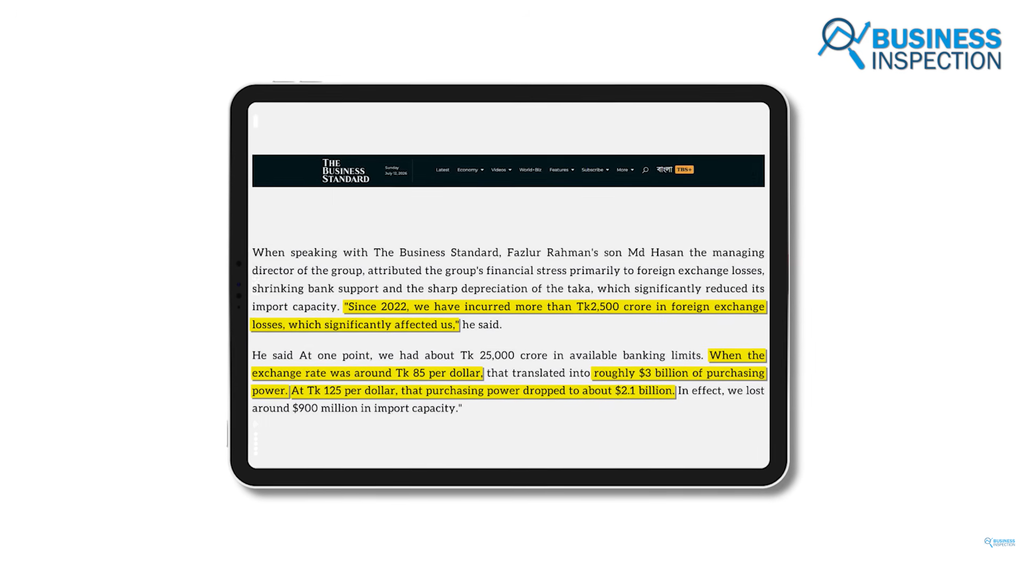
In other words, City Group effectively lost nearly USD 900 million in import purchasing power. At the same time, several banks reduced or completely stopped providing working capital support. As a result, only around 10 to 12 banks remained capable of offering substantial financing to City Group. In some cases, even when credit facilities had already been approved, foreign suppliers refused to accept letters of credit, or LCs, issued by certain Bangladeshi banks. Consequently, the company began facing serious difficulties in importing the raw materials required for its operations.
Meanwhile, six industrial projects developed by City Group at the Hossendi Economic Zone, involving investments of approximately BDT 14,000 crore, faced delays in starting commercial production because the promised gas connections were not provided on time. As a result, these massive investments remained commercially inactive for an extended period. According to City Group’s management, the company incurred losses of approximately BDT 5 crore every day from these projects due to interest expenses, salaries, and other fixed operating costs. This happened despite the company having already spent an additional BDT 150 crore on gas-related infrastructure and security deposits. On the other hand, City Group’s attempt to secure alternative financing through a BDT 1,300 crore zero-coupon bond also failed to provide the expected relief. The bond approval process took approximately 14 months. By the time approval was granted, the company’s borrowing costs had increased so significantly that the financing instrument was no longer commercially viable. To stabilize the situation, City Group proposed restructuring its loans rather than allowing them to be immediately classified as defaulted loans. Under default classification, a loan is formally categorized as a non-performing loan when the borrower fails to repay the scheduled installments according to the agreed terms. Loan restructuring, on the other hand, allows lenders to modify the terms and conditions of a loan so that the borrower can continue operating its business and gradually regain the ability to repay its debt. During this period, City Group also presented plans to sell some of its non-core assets to improve its debt repayment capacity. Following these developments, Bangladesh Bank encouraged the lending institutions to work toward a coordinated solution. Consequently, 36 banks began developing a joint restructuring framework covering approximately BDT 26,600 crore in outstanding loans. The proposed framework includes a jointly controlled escrow account that would operate through a waterfall mechanism. A waterfall mechanism is a financial distribution system in which payments are made according to a predetermined order of priority. In this arrangement, payments would first be made to lenders, followed by employees and suppliers, and finally shareholders. The proposal also includes an independent monitoring committee, an external restructuring adviser, and the necessary regulatory approvals. These measures are intended to maintain business continuity, improve repayment discipline, and ensure greater financial transparency.
The Banking Blind Spot
City Group’s financial crisis has significantly affected the company’s reputation. At the same time, it has exposed several underlying weaknesses in Bangladesh’s banking sector. According to an investigative report published by Bonik Barta, City Group’s financial difficulties have highlighted major shortcomings in the credit assessment practices of Bangladeshi banks. Many banks reportedly placed excessive confidence in City Group’s long-established reputation and approved substantial loans without adequately evaluating project-specific risks. Project-specific risks refer to risks that affect the success, cost, or timely completion of an individual project, rather than the entire company or its other projects. Despite City Group facing prolonged gas shortages and uncertainty over industrial gas connections, banks continued financing several capital-intensive projects that depended heavily on timely access to utility services.
According to Bonik Barta, this mismatch between financing decisions and actual infrastructure conditions became one of the major factors contributing to the crisis. As of April 2026, City Group had borrowed from 48 domestic and international banks and financial institutions, creating an unusually interconnected lending structure. Among its foreign creditors, HSBC had an exposure of approximately BDT 2,262 crore, while Standard Chartered had provided loans totaling approximately BDT 2,072 crore. Several major domestic banks were also among City Group’s lenders. City Bank had approximately BDT 1,679 crore in outstanding loans to the group, while United Commercial Bank, or UCB, had an exposure of around BDT 1,579 crore. Eastern Bank had provided approximately BDT 1,407 crore, followed by BRAC Bank with BDT 1,070 crore and Prime Bank with BDT 1,030 crore. Other lenders included Mutual Trust Bank with approximately BDT 968 crore, Dutch-Bangla Bank with BDT 946 crore, Pubali Bank with BDT 913 crore, Bank Asia with BDT 908 crore, and Southeast Bank with BDT 818 crore. What makes this situation particularly concerning is that each of these institutions is recognized as a strong commercial bank in Bangladesh, with a long history of maintaining comparatively low non-performing loan ratios.
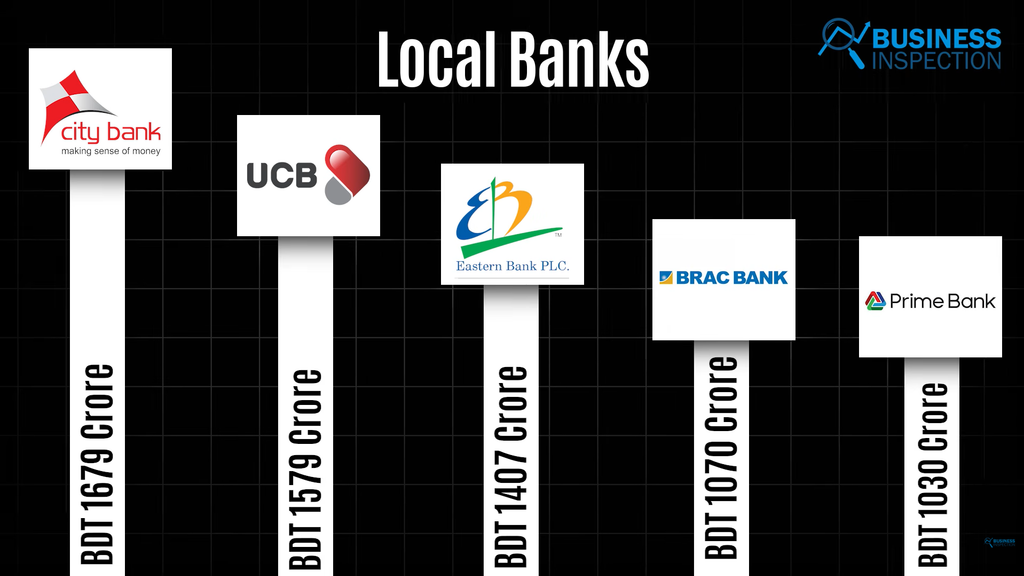
Therefore, if a borrower as large as City Group were to enter the list of loan defaulters, the consequences of these banks’ concentrated exposure would not necessarily remain limited to a single company.Instead, there is a significant risk that the asset quality of otherwise well-managed lending institutions could also deteriorate.
The Bigger Picture
City Group’s financial crisis demonstrates how deeply interconnected Bangladesh’s financial system, industrial sector, and investment climate have become. When a major conglomerate remains under financial pressure for an extended period, the consequences are not limited to the company itself. Instead, the effects gradually spread throughout the economic ecosystem, affecting manufacturers, suppliers, distributors, retailers, banks, and ultimately consumers.
At the same time, such a crisis can influence international perceptions of Bangladesh’s corporate governance, sovereign risk, and overall investment climate. If financing risks increase, foreign lenders and suppliers may demand higher risk premiums. This would raise the cost of doing business and place additional pressure on domestic industries. The situation has also exposed a structural weakness in Bangladesh’s financial system. Because the country’s capital market remains relatively underdeveloped, large industrial enterprises must depend heavily on commercial bank loans to finance their long-term expansion projects.
As a result, banks are often left responsible for financing long-term investments and comparatively high-risk industrial projects. Many people compare City Group’s financial crisis to incidents of bank looting in Bangladesh. However, one important distinction must be kept in mind. The company’s intention was not to engage in fraud. Rather, the enormous bank loans it took to finance business expansion eventually turned into a major financial trap. Bangladesh has witnessed similar cases before, including the example of Otobi. The question now is whether City Group will be able to overcome this crisis and regain its former position, or whether its financial difficulties will become another warning sign for Bangladesh’s corporate lending sector.






Leave a Comment