
Owning a private car in Bangladesh is no longer simply a symbol of luxury. For many families, it has become an important part of daily transportation, business activities, personal safety, and time management. Over the past decade, Bangladesh has made significant progress in infrastructure development, household incomes have increased, and demand for private vehicles has continued to grow. However, purchasing a new car remains extremely expensive for most people. One of the main reasons is the country’s high vehicle taxation system, where various taxes and duties can add substantially to a car’s original price. Consequently, a buyer in Bangladesh often has to settle for a smaller vehicle or a reconditioned car with the same budget that could purchase a modern, safer vehicle in many other countries. But why are taxes and import duties on cars so high in Bangladesh?
Overview
Private cars were once considered luxury assets reserved for a relatively small segment of Bangladesh’s population. However, economic growth, the rapid expansion of the middle and affluent classes, improvements in road infrastructure, the construction of expressways and bridges, and easier access to car loans have gradually made private vehicles a necessity for many families.
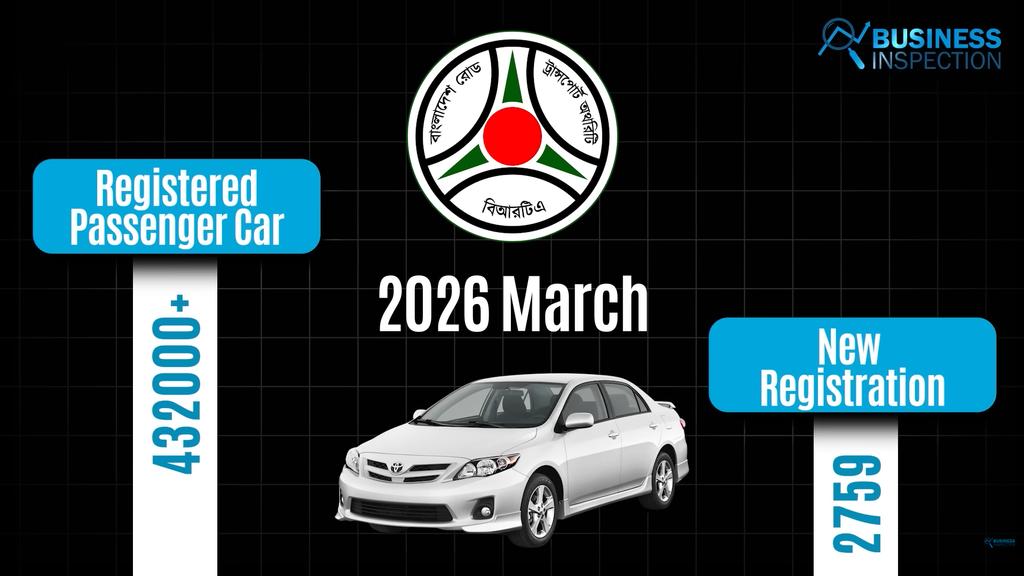
Despite this growing demand, Bangladesh’s automobile market remains heavily dependent on imported vehicles. For decades, reconditioned Japanese Domestic Market (JDM) cars have dominated the country’s passenger vehicle market. Because these vehicles are comparatively more affordable than brand-new cars, a significant portion of middle-class buyers continues to depend on this segment. However, in recent years, the arrival of official dealerships and local assembly operations for international brands such as Hyundai, Proton, Toyota, BYD, and MG has also contributed to the growth of Bangladesh’s brand-new car market. Nevertheless, despite limited local assembly activities, most vehicles still depend on Completely Built Unit (CBU) imports or foreign components. According to the Bangladesh Road Transport Authority (BRTA), the number of registered passenger cars in Bangladesh exceeded 432,000 as of March 2026. During the first five months of 2026 alone, another 2,759 cars were newly registered, indicating continued demand for passenger vehicles across the country.
One of the main reasons cars become several times more expensive in Bangladesh is the taxation imposed after they arrive at the country’s ports. Vehicles such as the Toyota Corolla, Honda Civic, Toyota Prado, Land Cruiser, Hyundai Tucson, and conventional hybrid sedans may be affordable to middle- and upper-middle-income families in certain international markets. However, the prices of these same vehicles can be several times higher in Bangladesh. As a result, a buyer who could purchase a large SUV, premium sedan, or new electric vehicle abroad with a particular budget may have to settle for a smaller-engine vehicle, a lower-specification variant, or a reconditioned car in Bangladesh. Therefore, understanding Bangladesh’s automobile market requires more than examining international vehicle prices or domestic demand. It is equally important to understand how Customs Duty, Supplementary Duty, Regulatory Duty, Value Added Tax, Advance Income Tax, Advance Tax, and different customs valuation methods determine a vehicle’s final price after it enters the country.
The Hidden Cost of Owning a Car in Bangladesh
Bangladesh’s automobile taxation structure has undergone several changes over the past two decades, becoming increasingly complicated and expensive over time. However, the country’s automobile market was not always like this. The period between 2001 and 2007 is often described as one of the golden periods of Bangladesh’s car import business. During those years, relatively lower import duties meant that a Toyota Axio could be purchased for approximately BDT 11 lakh to BDT 12 lakh, while a Toyota Prado cost around BDT 45 lakh to BDT 55 lakh. A Toyota Land Cruiser was also available for approximately BDT 75 lakh to BDT 85 lakh. In other words, these vehicles were once within reach of upper-middle-income buyers.
However, the situation began changing significantly after 2009, when the newly formed government sharply increased import duties on large-engine SUVs and premium vehicles. The government’s stated justification was to increase revenue collection. However, according to some analysts, another underlying factor was the tax-free vehicle import privileges available to members of parliament at the time. Members of parliament could import these vehicles without paying the usual taxes and later sell them at prevailing market prices after several years of use, allowing them to receive substantial financial benefits despite paying no import taxes. However, the currently elected members of Bangladesh’s parliament have not used this tax-free vehicle import privilege. Subsequently, in April 2026, the government abolished the privilege for members of parliament. Nevertheless, the country’s high automobile tax structure was not reduced to its previous levels. Instead, further changes were introduced in the fiscal year 2026–27 budget. These almost annual changes in vehicle taxation have not affected luxury cars alone. Over time, they have transformed the pricing structure of Bangladesh’s entire passenger car market. Avik Anwar, Bangladesh’s first local and international motorsports champion, has also discussed the country’s unusually high automobile taxation structure in detail through a video published on his YouTube channel.
Importing a car into Bangladesh today involves much more than paying a single import duty. Once a vehicle arrives at a port, it is first subject to Customs Duty (CD), a form of taxation commonly applied in international trade. Regulatory Duty (RD) is then added, primarily intended to protect domestic industries from foreign competition. Although this duty is meant to support the local automobile industry, Bangladesh has yet to develop a comprehensive passenger car manufacturing industry. Next comes Supplementary Duty (SD), generally imposed on luxury, nonessential, or harmful products. However, in Bangladesh, vehicles such as the Toyota Aqua, Honda Vezel, Toyota Noah, Toyota Voxy, and even many hybrid and electric vehicles fall within this taxation framework. Consequently, family vehicles that serve practical transportation needs can be taxed as luxury products. On top of these duties, Value Added Tax (VAT), Advance Income Tax (AIT), and Advance Tax (AT) are also imposed on the same vehicle.
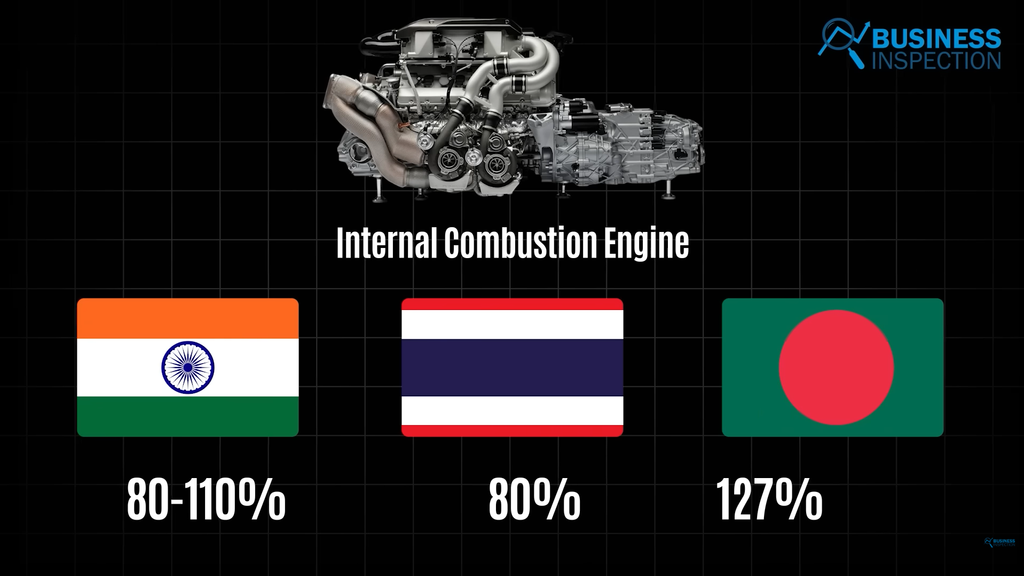
This layered taxation system places Bangladesh among the countries with exceptionally high effective automobile import tax rates. While taxes on internal combustion engine (ICE) vehicles in India are described in the source comparison as ranging from approximately 80% to 110%, and Thailand’s vehicle import taxation is estimated at around 80%, Bangladesh’s lowest effective automobile tax rate is approximately 127%. At the highest end, the effective tax rate can exceed 800%. In practical terms, a large SUV priced at USD 100,000 in an international market could reach an approximate tax-inclusive value of USD 900,000 after being imported into Bangladesh. As a result, vehicles commonly used as full-size family SUVs in many countries effectively become ultra-premium products in the Bangladeshi market.
According to the fiscal year 2026–27 budget, the effective import duty on non-hybrid internal combustion engine passenger cars with engine capacities of up to 1,200 cc is approximately 132.26%. For vehicles with engine capacities between 1,200 cc and 1,600 cc, the rate increases to 155.88%. The effective duty then rises to approximately 218.60% for vehicles between 1,600 cc and 2,000 cc and approximately 453.80% for vehicles between 2,000 cc and 3,000 cc. For cars with engine capacities between 3,000 cc and 4,000 cc, and those exceeding 4,000 cc, the highest effective duty reaches approximately 845.80%. Hybrid sedans follow a different taxation structure. Vehicles with engine capacities of up to 1,800 cc are subject to an effective rate of 73.43%, while those between 1,800 cc and 2,000 cc face a rate of 96.10%. The subsequent brackets increase progressively to 155.88%, 218.60%, 453.80%, and approximately 610% at the highest level. Similarly, the effective taxation of plug-in hybrid electric vehicles (PHEVs) begins at 73.43% for vehicles with engine capacities of up to 1,800 cc and increases progressively across higher engine-capacity categories.
Significant changes have also been introduced in the recent budget for environmentally friendly electric vehicles (EVs). Previously, most electric vehicles were covered by an effective taxation structure of approximately 93%. However, a new price-based taxation system has now been introduced. Under this framework, electric vehicles priced at up to USD 25,000 are subject to a tax rate of 64.25%. The rate increases considerably as the vehicle’s price rises. EVs priced between USD 25,000 and USD 50,000 face an effective tax rate of 80.17%, while those priced between USD 50,000 and USD 100,000 are taxed at 135.91%. For electric vehicles priced between USD 100,000 and USD 200,000, the rate rises to 159.80%, while vehicles costing more than USD 200,000 face an effective tax rate of approximately 223.50%. As a result, prices of Japanese and European electric vehicles have increased significantly. For example, a limited number of Rolls-Royce fully electric vehicles had previously been imported into Bangladesh because they benefited from the comparatively lower taxation structure. However, with the effective rate rising above 230% under the new structure, imports in this segment are expected to become commercially unviable. Previously, the government reportedly collected approximately BDT 4.5 crore to BDT 5 crore in revenue from each imported Rolls-Royce. Meanwhile, the reduction in taxes on electric vehicles priced below USD 25,000 is expected to benefit Chinese electric car manufacturers the most.
The commercial vehicle segment presents a similar situation. Double-cabin pickup trucks are widely used in many countries for agriculture, construction, electricity distribution, telecommunications, mining, security services, and government operations. In Bangladesh, these vehicles are also regularly used by the police, armed forces, utility service providers, and private organizations. Nevertheless, Completely Built Unit (CBU) double-cabin pickup trucks with engine capacities of up to 1,600 cc are subject to an effective tax rate of 132.26%. The rates increase across subsequent categories to 155.88%, 189.20%, 610.60%, and 845.80%. Meanwhile, microbuses with engine capacities of up to 1,800 cc are subject to a tax rate of 93.16%. However, when seating capacity exceeds 15 passengers, the applicable rate increases to 108.84%. Ambulances receive a comparatively lower rate of 33.63%, reflecting the importance of emergency medical services.
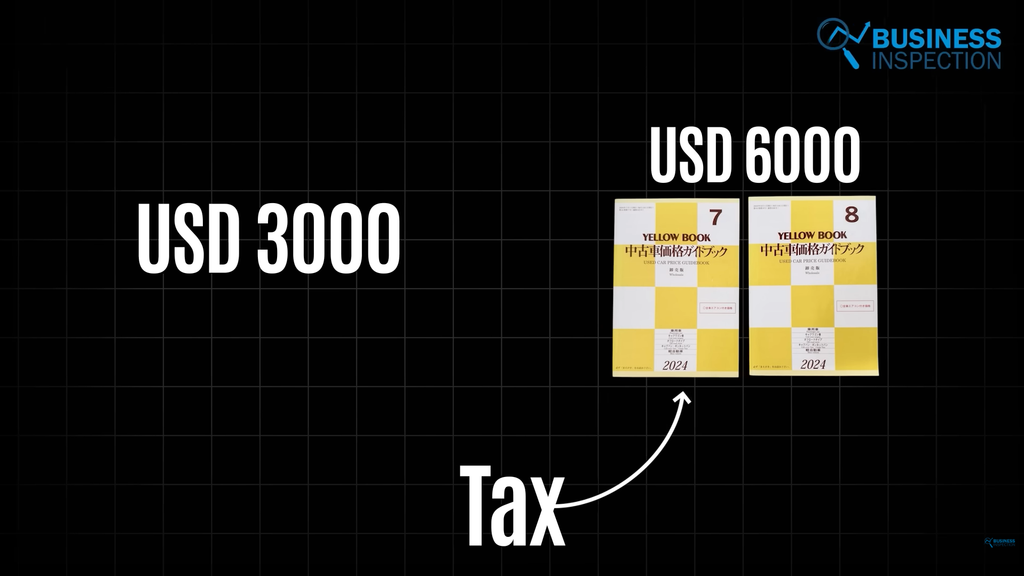
Another important aspect of Bangladesh’s automobile taxation system is the different customs valuation methods applied to brand-new and reconditioned vehicles. For brand-new cars, import duties are calculated based on the manufacturer’s invoice value. However, for reconditioned vehicles imported from Japan, customs authorities use the Japan Yellow Book to determine the applicable valuation. The value listed in this reference is used as the basis for calculating import duties. Consequently, even if an importer purchases a reconditioned vehicle for USD 3,000, the import duties may be calculated on USD 6,000 if that is the value listed in the Yellow Book. In other words, importers must pay taxes based on the officially assessed value rather than the actual purchase price, significantly increasing the final cost of reconditioned vehicles in Bangladesh.
One of the most common arguments used to justify Bangladesh’s unusually high automobile taxes is that private cars are luxury products primarily purchased by wealthy individuals. From this perspective, imposing higher taxes on these vehicles appears reasonable. However, this assumption no longer fully reflects the country’s current economic and social realities. Over the past decade, Bangladesh has experienced significant economic development, rapid urbanization, improvements in road infrastructure, and an expanding middle and affluent class. As a result, private cars have increasingly become more than symbols of social status. For many families, they now serve as important means of safe, reliable, and time-efficient transportation.
Singapore is also frequently mentioned as an example of a country with exceptionally high taxes on private vehicles. However, before discouraging private car ownership, Singapore developed an extensive and integrated public transportation network, including its Mass Rapid Transit (MRT), Light Rail Transit (LRT), and public bus systems. As a result, most residents can travel reliably without owning a private vehicle. Bangladesh presents a very different situation. Many local buses operating on Dhaka’s roads remain in poor condition, reflecting serious weaknesses in the country’s public transportation system. Although Dhaka now has a metro rail service, it currently connects only limited parts of the capital and remains far from sufficient for a city of this size. Outside Dhaka, effective mass transit systems are also largely unavailable. Therefore, if the government’s objective is genuinely to reduce private car ownership through higher taxes, should it not first establish a safe, reliable, punctual, and nationwide public transportation system similar to Singapore’s? Without providing practical alternatives, simply increasing taxes and making private vehicles less affordable cannot serve as a sustainable transportation policy.







Leave a Comment